The Upstream Revolution: Why the RFI is Redefining the Deal Architect

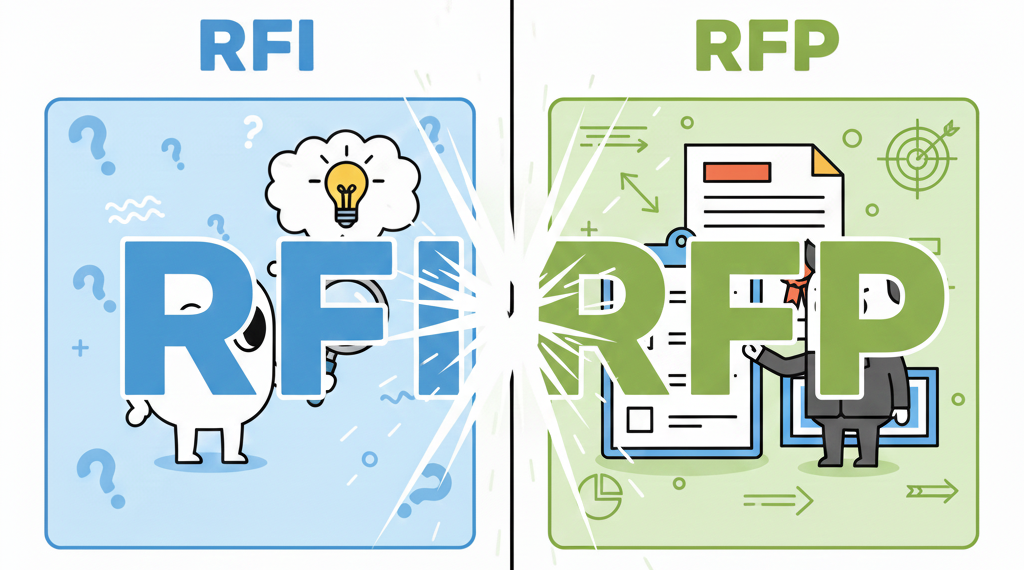
In the world of complex procurement, the Request for Proposal (RFP) has long been the main event. We waited for the document, checked the boxes, and hoped our technical specifications outshone the rest.
But a fundamental shift is occurring. In U.S. government procurement—a reliable bellwether for enterprise trends—RFPs are declining while Requests for Information (RFIs) are surging. This isn't just a change in paperwork; it is a signal that the "buying moment" has moved upstream.
For Sales Engineers (SEs), this shift changes everything.
The Death of the "Requirement Filler"
Traditionally, the procurement cycle was back-loaded. Buyers knew what they wanted, and the RFP was a tool for selection. Today, budget uncertainty and technical complexity (especially in security and AI) have made buyers more cautious.
Organizations are now using the RFI stage to explore the market and define their own requirements without the risk of a formal commitment. This means if you are waiting for the RFP to influence the deal, you are already too late.
Comparison: Traditional vs. Modern Procurement
| Category | Traditional (RFP-Centric) | Current Trend (RFI-Centric) |
| Timing | Late stages of procurement | Early to mid stages |
| Primary Goal | Spec compliance & bidding | Problem definition & exploration |
| SE Role | Compliance-focused | Consultative / Influencer-focused |
| Success Metric | Winning the bid | Shaping the future requirements |
The New SE Playbook: From Compliance to Consultation
When the RFI becomes the primary tool for market exploration, the Sales Engineer’s role evolves from a technical expert to a Deal Architect.
To succeed in an RFI-centric world, SEs must pivot their approach:
- Define the Problem, Don't Just Solve It: Instead of checking boxes, help the buyer understand their own challenges and set the strategic direction.
- Focus on Outcomes, Not Specs: Move beyond feature lists. Use case-driven explanations are far more valuable than technical jargon at this stage.
- Radical Transparency: Build trust by being honest about trade-offs, assumptions, and limitations. In an RFI, a "no" that explains why is more valuable to a buyer than a "yes" that hides complexity.
- Interpret Intent: Don't just answer the question on the page. Understand the why behind the question to provide insights that the buyer hasn't even considered yet.
Redefining "The Win"
In an RFP, you win when you are selected. In an RFI, you win when your language, concepts, and technical vision appear in the subsequent RFP.
The goal is to foster follow-up dialogue and expand your network of stakeholders within the client organization. If the final requirements look like a mirror image of your consultative advice, the deal is yours before the official bidding even begins.
The Bottom Line
The rise of the RFI is a logical response to a world where technology is harder to understand and budgets are harder to secure. For Pre-sales teams, this is a positive evolution. It elevates the SE role from a supporting player to a core strategist—the Architect who designs the deal from the ground up.
This post was inspired by insights from Sales-Engineering.org.


![[Webinar Recap] Cracking the Code: Mastering GovCon & AI Teaming Strategies](/content/images/size/w600/2025/12/Frame-1000002960.jpg)